How Much Does Car Shipping Cost in 2025? Price Guide
How Much Does Car Shipping Cost in 2025?
The average cost to ship a car in 2025 ranges from $500 to $1,800, depending on distance, vehicle size, and transport type. But that range is wide enough to be almost useless without context.
This guide breaks down real pricing by distance tier, explains every factor that moves the needle, and shows you how to get the most accurate quote for your specific situation.
Average Costs by Distance
Distance is the single largest factor in car shipping pricing. Here is what to expect for a standard sedan using open transport in 2025:
| Distance | Cost Range | Cost Per Mile |
|---|---|---|
| Short haul (under 500 miles) | $400–$700 | $1.00–$1.50 |
| Medium haul (500–1,000 miles) | $600–$1,000 | $0.75–$1.00 |
| Long haul (1,000–1,500 miles) | $800–$1,200 | $0.60–$0.80 |
| Cross-country (1,500–2,500 miles) | $1,000–$1,500 | $0.50–$0.65 |
| Coast-to-coast (2,500+ miles) | $1,200–$1,800 | $0.40–$0.55 |
Notice the pattern: cost per mile drops as distance increases. A 300-mile shipment costs more per mile than a 2,500-mile trip because carriers have fixed overhead—loading, paperwork, insurance—regardless of how far they drive.
Quick Estimate
For a rough ballpark, multiply your distance by $0.60 for open transport of a standard sedan. Add 30–50% for enclosed transport, 10–20% for SUVs, and 20–40% for full-size trucks.
Factors That Affect Your Price
Seven variables determine what you actually pay. Understanding them helps you budget accurately and find savings.
1. Distance
Already covered above, but worth emphasizing: distance accounts for roughly 50% of your total cost. A shipment from Dallas to Houston costs fundamentally less than Dallas to Seattle regardless of any other factor.
2. Vehicle Size and Weight
Carriers have limited trailer space. Larger vehicles occupy more of it, so they cost more.
- Compact and mid-size sedans — Baseline pricing. A Honda Civic or Toyota Camry gets the best rates.
- Small SUVs and crossovers — Add 10–15%. A RAV4 or CR-V takes slightly more space.
- Full-size SUVs — Add 20–30%. A Suburban or Tahoe significantly impacts trailer capacity.
- Full-size trucks — Add 20–40%. An F-150 with a full bed takes a premium position.
- Lifted or modified vehicles — Add $100–$300 more. Height restrictions and non-standard dimensions require specific trailer slots.
For a 1,500-mile shipment, expect to pay around $900 for a sedan and $1,200–$1,400 for a full-size truck.
3. Open vs. Enclosed Transport
This is the second-biggest pricing factor after distance.
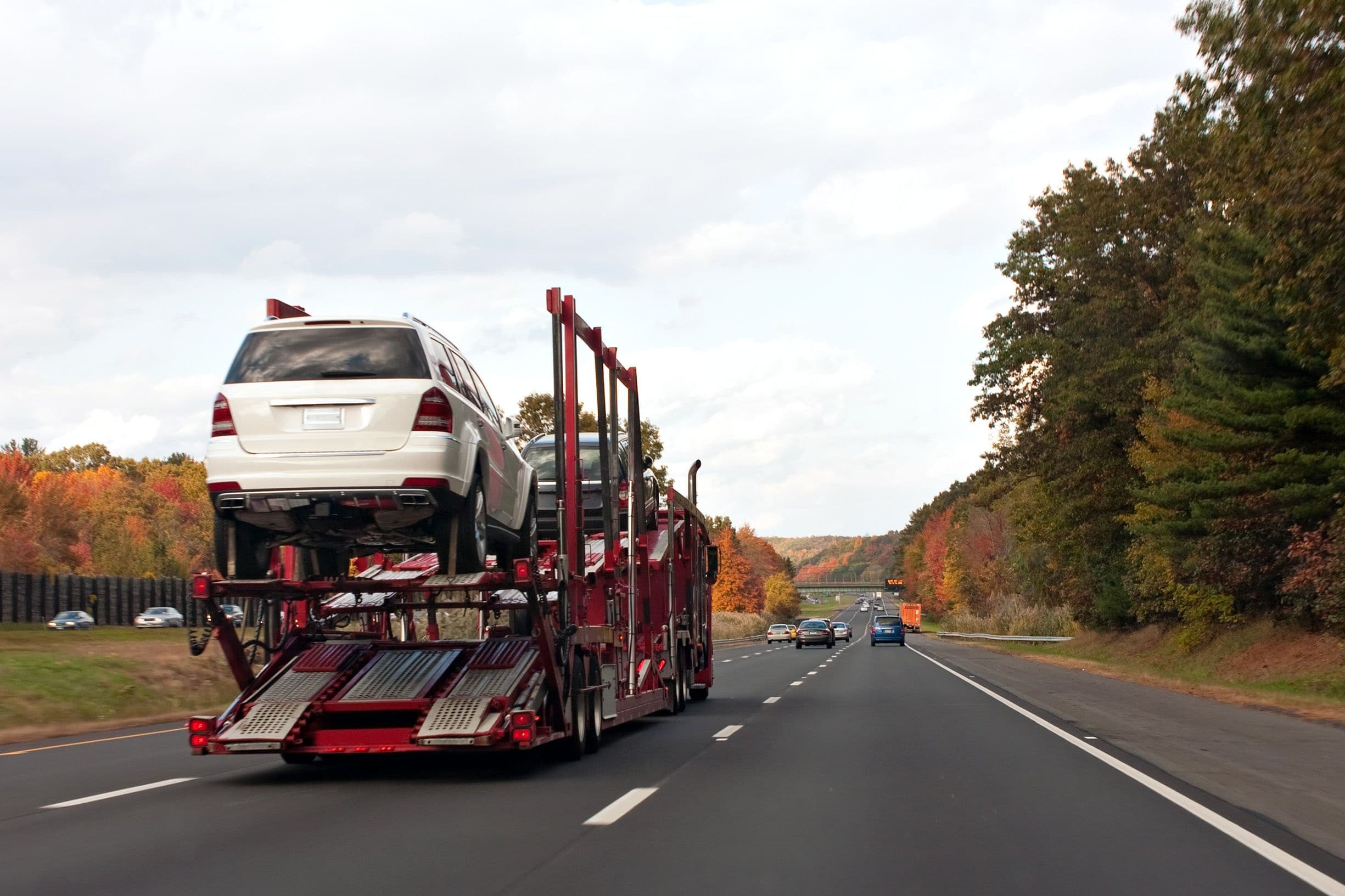
Open transport is the industry standard. Your car rides on a multi-car trailer exposed to the elements—the same way dealerships move new inventory. Over 90% of shipped vehicles travel this way.
Enclosed transport places your vehicle in a covered trailer, fully protected from weather and road debris. It costs 30–50% more than open transport.
| Route Example (1,500 miles) | Open Transport | Enclosed Transport |
|---|---|---|
| Standard sedan | $850–$1,100 | $1,200–$1,600 |
| Mid-size SUV | $1,000–$1,200 | $1,400–$1,800 |
Enclosed transport makes financial sense for vehicles worth over $75,000, classics with irreplaceable paint, and exotics where a single rock chip creates a four-figure repair bill.
4. Season and Timing
Auto transport pricing follows predictable seasonal patterns:
- Peak season (January–March): Snowbird migration pushes prices up 20–40%. Carriers heading to Florida and Arizona fill quickly.
- Summer (June–August): Family relocations drive 10–20% increases.
- Off-peak (April–May, September–November): Best pricing. Carriers compete for loads, and you benefit.
- Holidays: Reduced carrier availability around Thanksgiving and Christmas means higher rates and longer wait times.
The same Los Angeles to New York route might cost $1,400 in January and $1,000 in April. If your schedule allows flexibility, shipping off-peak saves real money.
5. Route Popularity
High-traffic corridors between major cities offer the best rates because carriers run these routes regularly. Shipping from Los Angeles to Chicago or New York to Miami puts you on a well-traveled lane with plenty of carrier options.
Rural pickup or delivery locations add $100–$250. If both ends are rural, expect an even steeper premium. Some remote locations require meeting the carrier at a highway-accessible point.
6. Vehicle Condition
Your car needs to start, steer, and brake for standard loading. If it does not:
- Runs but has issues: Standard pricing usually applies if the car can drive onto the trailer.
- Rolls but does not run: Add $100–$200. The carrier uses a winch.
- Completely inoperable: Add $200–$400+. Requires specialized equipment, and not all carriers handle these vehicles.
7. Market Conditions
Fuel prices, driver availability, and economic trends create fluctuations. When diesel prices spike, transport rates follow within weeks. The ongoing driver shortage in the trucking industry keeps rates higher than historical norms.
Watch Out for Lowball Quotes
If a quote comes in 25% or more below competitors, ask why. Legitimate explanations exist—backhaul discounts, off-peak pricing. But suspiciously low quotes often lead to last-minute price increases, phantom carriers, or deposit scams.
How to Get the Most Accurate Quote
Generic calculators give generic numbers. For an accurate quote, you need to provide specifics:
- Exact addresses — City and zip code at minimum, full addresses for door-to-door quotes
- Vehicle details — Year, make, model, and any modifications
- Condition — Running, non-running, or modified
- Preferred dates — A flexible window gets better rates than a fixed date
- Transport type — Open or enclosed
Get quotes from at least three companies. Prices clustered within 15–20% of each other suggest fair market rates. An outlier far below the cluster is a red flag.
How to Save on Car Shipping
You cannot change the distance, but you can control several cost factors:
- Be flexible with dates. Offering a 3–5 day pickup window instead of a single date can save $50–$150. Carriers reward flexibility because it helps them optimize routes.
- Ship off-peak. If timing is not critical, April, May, and September offer the best rates.
- Choose open transport. Unless your vehicle genuinely needs enclosed protection, open transport delivers the same car to the same destination for 30–50% less.
- Book 2–3 weeks ahead. Last-minute shipments cost more because carriers with space know you are in a rush.
- Consider terminal pickup. If a carrier has a terminal near you, using it instead of door-to-door service can save $50–$150.
What Your Quote Should Include
A legitimate quote covers everything you will pay. Before booking, confirm:
- Total price with no hidden surcharges
- Deposit amount and when the balance is due
- Insurance coverage details and limits
- Pickup window and estimated delivery timeline
- Cancellation policy and refund terms
If a company cannot clearly answer these questions, that tells you something about how the rest of the experience will go.
Get Your Free Quote
Car Transport Connection provides transparent, all-inclusive pricing:
- No hidden fees — The price quoted is the price you pay
- $150 Price Protection guarantee
- Instant quotes for open and enclosed transport
- Licensed, insured carriers verified through FMCSA
Need help estimating costs for a specific route? Our transport specialists provide personalized quotes based on your exact vehicle and timeline.
Related Articles
How Long Does Car Shipping Take? Transit Time Guide
Realistic car shipping transit times by distance and route. Learn what affects delivery speed and how to plan your auto transport timeline in 2025.